The FujiFilm GFX 50S uses the same 50MP chip that has been used by several camera companies over the years. Phase One uses this chip in the IQ150,250 and 350, and Pentax used it in their 645Z. Recently Hasselblad used the chip in the 50c Medium Format back and the new X1D mirrorless camera.
In tests I had made with the Phase One IQ250 and IQ150, I saw that the Phase One implementation provided some excellent dynamic range in the ISO 100 to 800 range, but still seemed to be a bit noisy past this. Especially when shadows were pushed. I was hoping to see the same amount of push with the Fuji implementation in the GFX. I was able to test this on a recent shoot at Calico Rock. I worked as series of 5 part panos all hand held. My goal was to only shoot 1 shot for each segment and not have to bracket the exposures since I was hand holding the camera. The last segment on the far right was a classic shot where half of the image was in shadow and the other half in full shade. I was metering more to protect my highlights, so the shadows were exposed very dark. This can be seen in the side by side shot below.
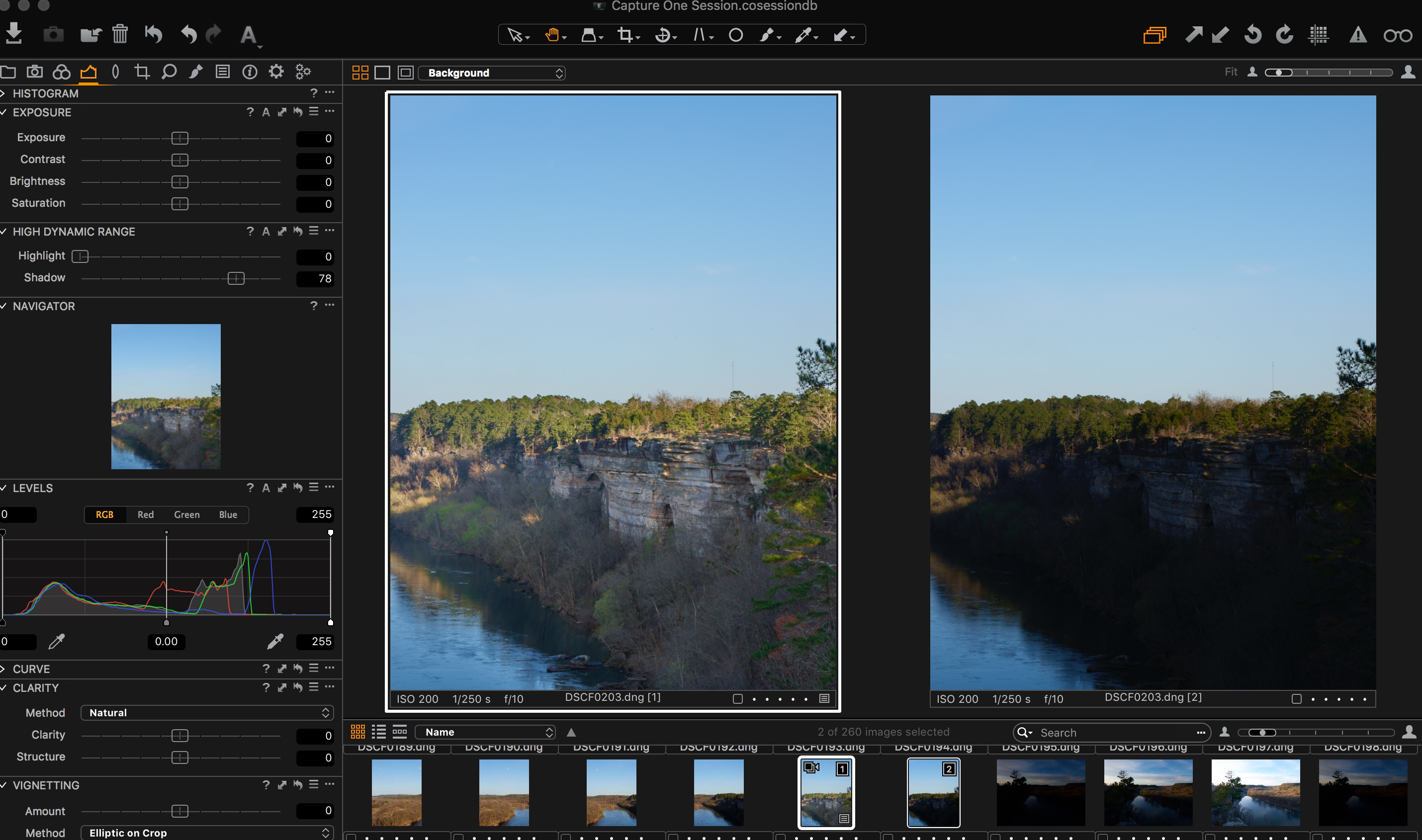
In this side by side view you can see the original shot on the left and where I have pushed up the shadows on the right side. From this view it’s a bit hard to really tell just how much room there is in the file taken at ISO 200. So I have taken a few crops at a 100% view. In this view notice the amount of details that are present in the rock bluff and trees along the bluff. Also note how well the light green leaves show up.
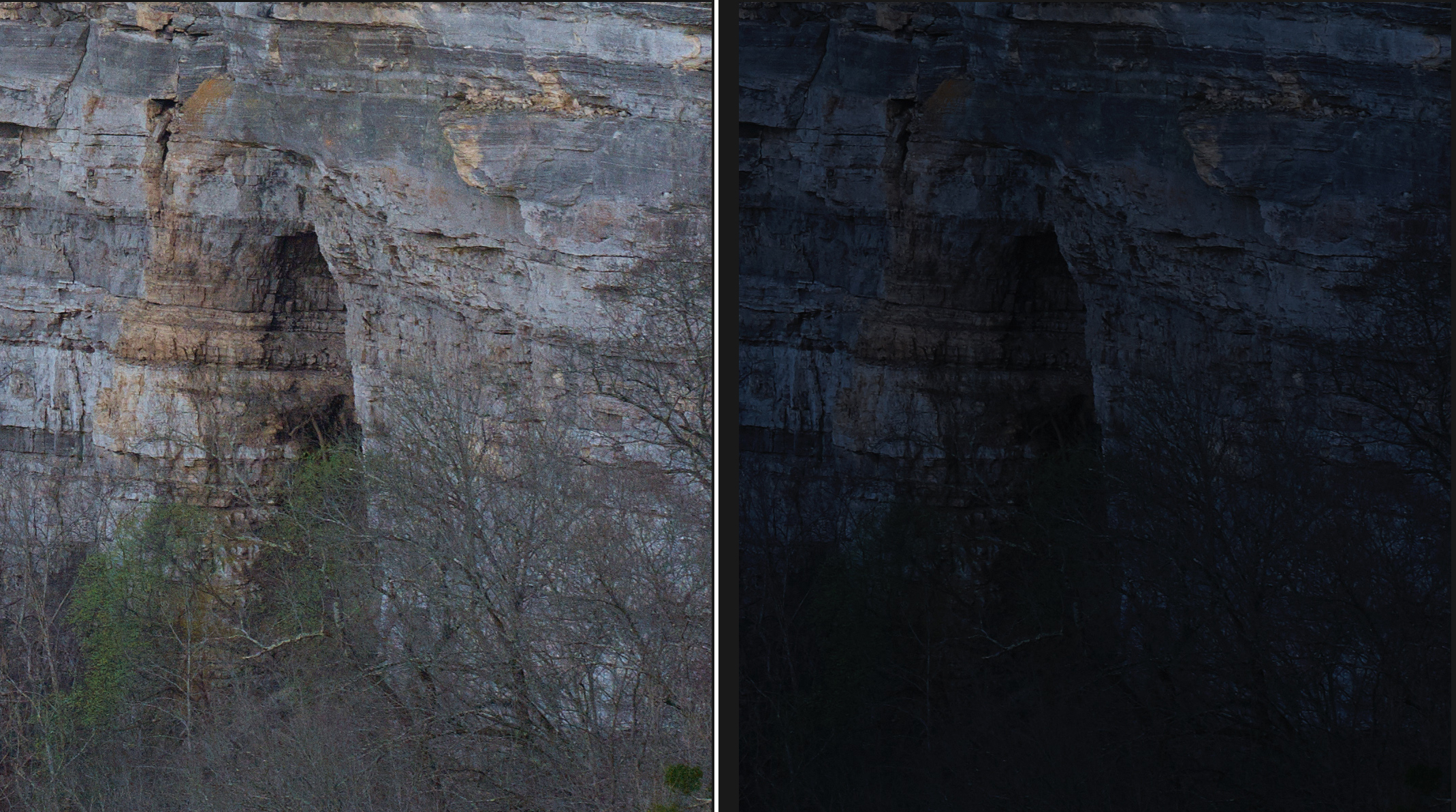
Shadow push from the Fujifilm GFX 50S
In this shot, by far the most impressive, look at how much color and detail were still available. Look for the green pine needles and the brown fall leaves on the oak. Also you can see again a lot of finer branch details that were not visible before I pushed the image. The key here is the image before is basically black, so the amount of push is close to 3 stops total, between exposure push and shadow adjustment.
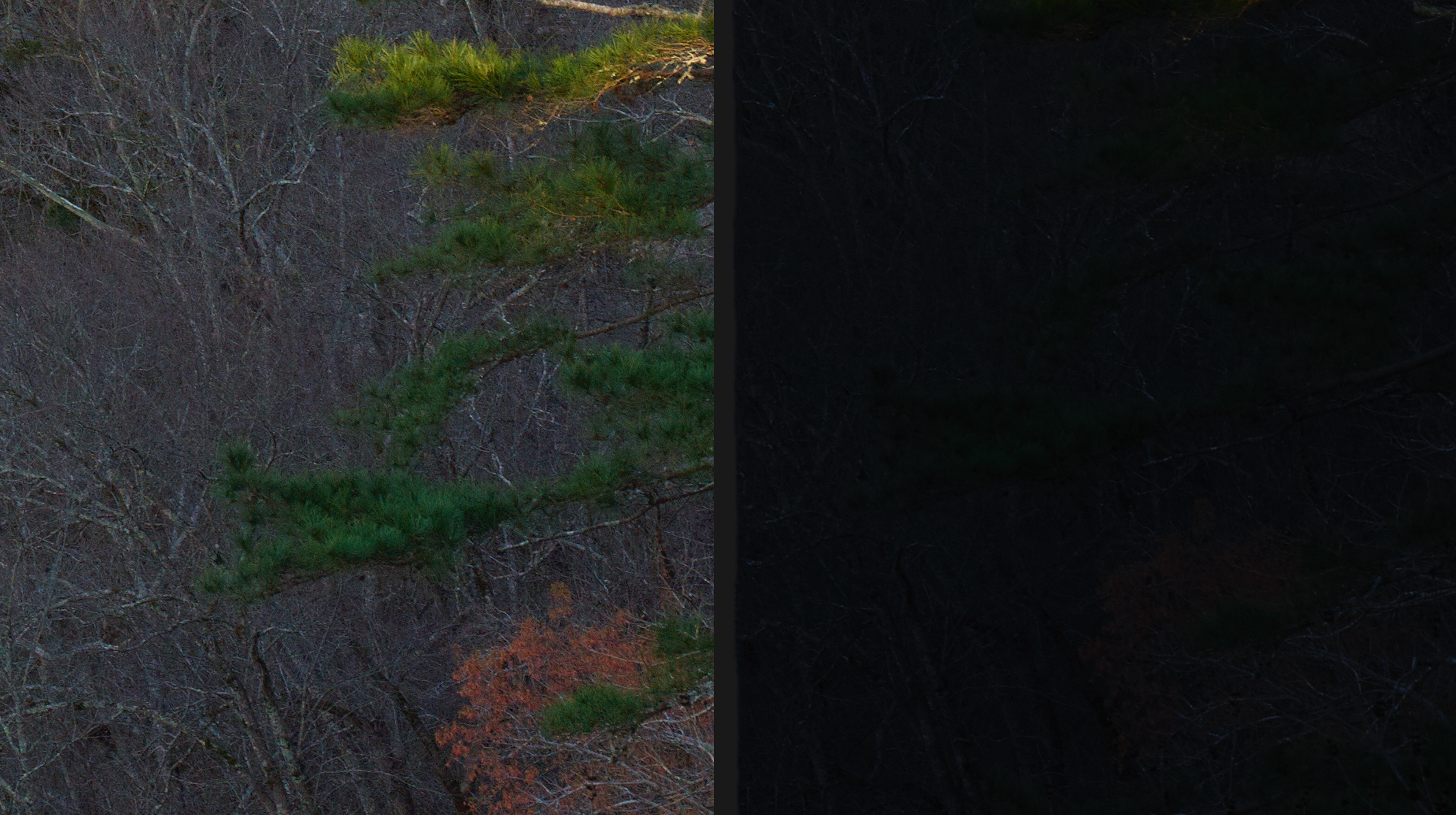
Comparison for Fujifilm GFX 50s on shadow push.
Not bad!! In fact excellent for ISO 200.
This type of push would easily hold up in a large print. So what I have learned so far:
- The Fujifilm GFX allows easy hand held work with the 120mm lens and 32-64mm lens
- There is a huge amount of room in the shadows for push from the base ISO of 100 up to around ISO 800
- You can get easily 1 to 1.5 stops of push up to ISO 1600
- The files hold up very well with no loss in color saturation, no smearing or excessive noise
- By far the best raw converter is Capture One on files where you are attempting to push shadows



02/15/14 News from the CP+ Show in Japan–Pentax 645DII CMOS 50MP Camera
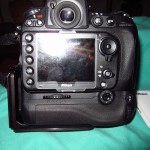
A view of the Pentax 645D 2014 from the back showing new LCD design
CP+ the Japanese eqvilent to the U.S. CES (Consumer Electronics Show) is going on through tomorrow. and one of the highlights as far as larger camera systems goes, is the information about the upcoming Pentax (now Ricoh) 645D2014. Instead of calling it the 645DII, it seems for now that the camera will be just called the 645D 2014. Interesting name indeed.
From looking at the announcement literature by Ricoh, this will be a pretty significant camera system for Medium Format users. Here are some high points that I gleaned from the overview.
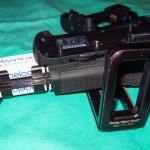
Side by side shot showing the original 645D and the new 645D 2014
Pentax first shook up the Market 5 years ago, when they first started listing a new 645D Digital camera, that would be based on the Film Pentax 645II. I was originally excited by this announcement but Pentax did little more than talk about it for several years and showed mock ups. I owned several good Pentax 645 lenses, that I was using on my Canon system with a Zork adapter, so the 645D would have been a perfect fit for me. However the long delay, pushed me to the Phase One camp and I purchased the P45+.
Pentax did finally ship the 645D about 1 year later, with a similar sensor to the one in the P45+ (it’s my understanding it’s not the exact same sensor) and they brought out basically the body with no new lenses. About 1 year before the actual ship date of the 645D, Pentax had a pretty good lineup in their primes and zooms for the 645II in the FA lenses. I had both the 35mm FA (excellent) and the 55mm FA, and had been thinking about the 35mm to 55mm zoom. Since Pentax still had a manual aperture ring on all the FA lenses, you could stop them down on other camera systems, like the Canon with a Zork adapter. However by the time the 645D shipped Pentax was no longer selling the 35mm FA in the U.S. (it’s my understanding that this lens is still sold in Japan). Also there was not much of a dealer network in the U.S. so anything that involved service would be possibly a bit of an issue. All repairs were still done in Japan, and there was only a 1 year warranty. Phase One at the time had their 3 year (now 5 year) value add warranty and I found that I preferred that type of warranty, even though the cost of the 645D was much less than the P45+.
Now with the 645D 2014, Pentax is showing that they have listened to the photography market and it seems that they are bring out this new camera with some much needed refinements. For studio photographers, the lack of a tethering solution on the 645D was a big issue. I am assuming that the 645D 2014 will have tethering since it’s shipping with USB3 support. The LCD on the camera is significantly larger, has more resolution and provides more information to the photographer, not to mention it has a tilt option which allows the camera to be used at waist level (a big plus to me). The CMOS sensor should be 50MP, not a huge jump over 39MP from the first 645D, but if it’s the same sensor that’s in the Phase One IQ250 or a similar Sony design, then I think you can expect some great things from this camera. The IQ250 (see this article I wrote on the IQ250) has shown to have an amazing dynamic range and this should cross over to the 645D 2014 when it ships.
What’s key here is that Pentax ship this camera on time i.e. April of 2014. If they miss their dates and push it back then they will loose momentum and photographers will look elsewhere. I don’t think they will have any problem showing good quality images, as I don’t think this chip can take a bad picture. I also hope that Pentax steps up with their dealer support in the U.S. and possibly offers a similar program to the Phase One Value add warranty. Time will tell on this. If the price does come out at under 10K U.S, I expect that it’s possible the flood gates may be opened in the U.S. since this chip is showing to be such an excellent performer and is definitely changing the game in the world of medium format digital. One thing that Pentax does not have here in the U.S. is a strong dealer channel pushing the product to the market, and allowing demo’s for both landscape and studio shooters.
Here are two translated links that give more detailed information from the press conference at the CP+ show in Japan.
Google translation for first information from CP+ show
Google translation for Ricoh imaging new from CP+ show
I have no idea how long these links will stay up, but hopefully they are kept in good order as they contain quite a bit of details on this new exciting MF camera.